
Upcoming: Ashes Of Jin
- Thread starter NightScare
- Start date
-
Remember! Never use the same account usernames and password across different servers!

You are using an out of date browser. It may not display this or other websites correctly.
You should upgrade or use an alternative browser.
You should upgrade or use an alternative browser.

- Dec 31, 2008
- 1,185
- 67
- 134
Closed beta planned for 31st March, can get yourself signed up on the website.Looks promising - can you not work faster and do an open beta next week? hahaha
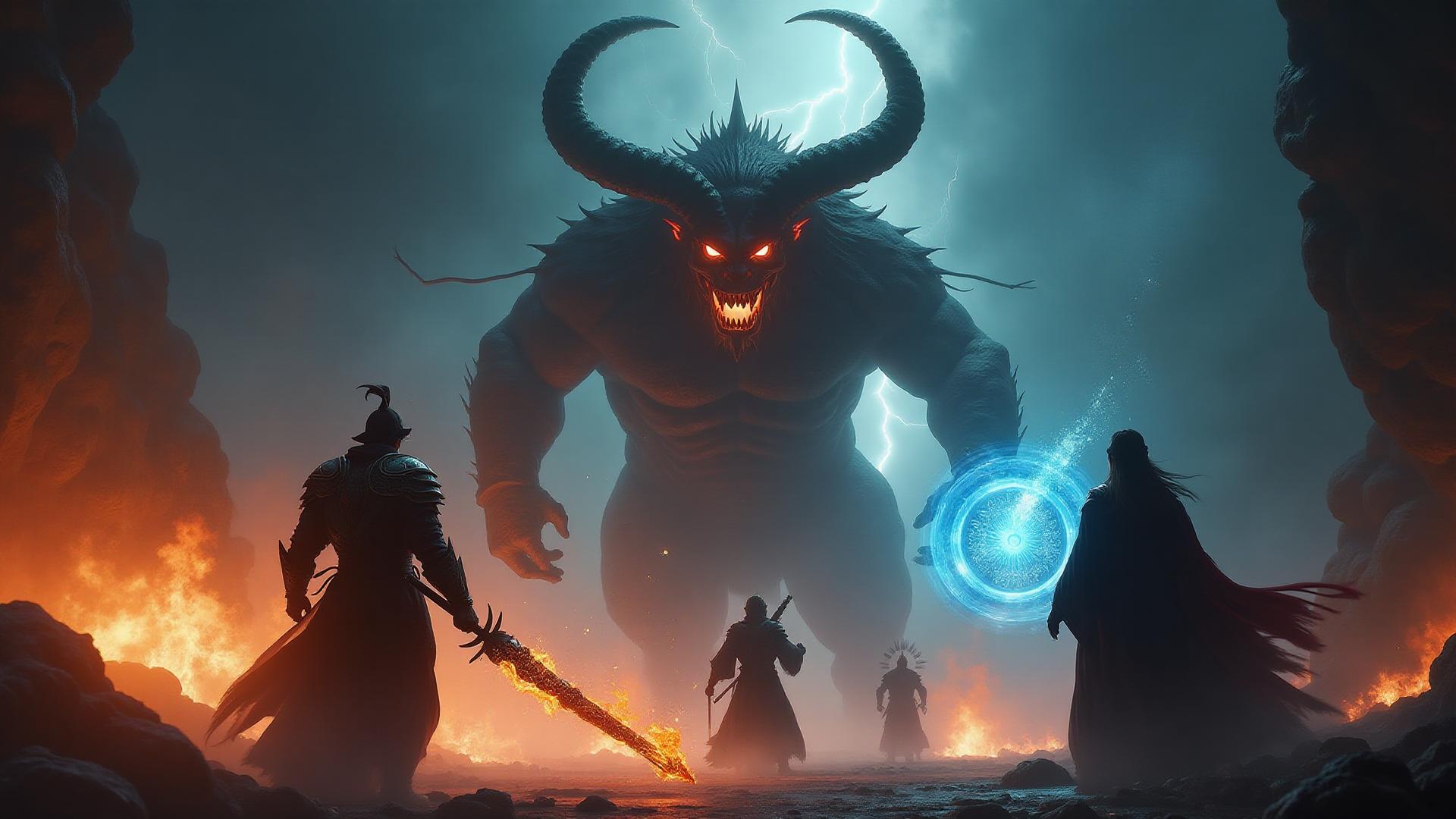
Ashes of Jin - Epic MMORPG Adventure
Join thousands of players in an epic MMORPG adventure. Choose your class, forge alliances, and conquer legendary battles.




Shouldn’t you be working on your relaunch?Signed up for BETA.
Really looking forward to this.
We're set and readyShouldn’t you be working on your relaunch?


- Jan 25, 2014
- 352
- 76
- 55
I cannot wait to not try itWe're set and ready
But I have signed up for Jin Beta looks good


- Dec 31, 2008
- 1,185
- 67
- 134
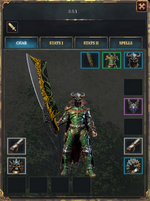
Warrior Spell Path Preview
Spell paths turn Warrior skills into meaningful choices rather than linear upgrades, letting you specialise into pressure, control, sustain, or setup depending on your build.Cleave
Base: A sweeping crescent slash hitting enemies in front.- Venom Edge – Chance to apply stacking green poison. Reduced attack speed in exchange for sustained damage.
- Iron Burst – Chance to briefly paralyse targets. Reduced damage, focused on control.
- Twin Crescent – Cross-slash with higher mana cost and lower damage, but a chance to temporarily boost attack speed.
Heavenfall
Base: A powerful skyfall strike dealing damage in a 3x3 area. Has a cooldown.- Radiant Burst – Impact silences enemies for a duration based on level. Reduced damage.
- Red Shatter – Applies red poison, reducing enemy defence for follow-up attacks.
- Ice Rend – Small chance to slow enemies on impact. Slightly reduced damage.
Dragon Pierce
Base: A focused thrust for single-target pressure.- Viper’s Fang – Chance to apply green poison.
- Thunder Spike – Chance to paralyse or silence. Reduced damage.
- Lifeblood Thrust – Converts part of damage dealt into health.
Executioner’s Will
Base: A stance that slightly increases damage.- Crimson Verdict – Further increases damage for aggressive play.
- Silent Edge – Chance to temporarily boost attack speed.
- Soul Eater – Chance to steal health based on damage dealt.
Shoulder Break
Base: A forward dash for engagement or repositioning.- Ram’s Fury – Hitting a target grants a short damage immunity bubble.
- Ice Sprint – Chance to slow targets hit during the dash.
- Dragon Smash – Applies a debuff causing the target to take increased follow-up damage.
Twin Fang Slash
Base: Dual strikes that deal melee damage.- Serpent’s Fury – Chance to apply bleed and ignore a large portion of armour.
- Soulrend – Converts part of damage into health drain. Lower damage, minor armour ignore.
- Ice Fang – Second strike may slow enemies. No armour ignore.


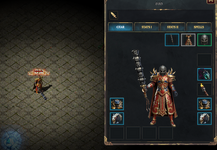
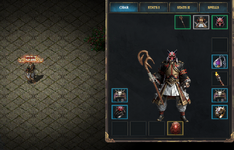
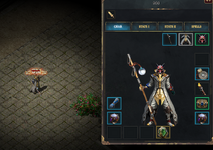
Hell yeah!!!!!! Looks insane!!!!!!!!!!!!!!!!View attachment 39023
I like this one aswell @Jambo
View attachment 39024
View attachment 39025
They are not 100% perfect yet, but a few good ones.
- Jul 16, 2004
- 3,687
- 849
- 345


Are you using 3d models or just canny from original sprites ?View attachment 39023
I like this one aswell @Jambo
View attachment 39024
View attachment 39025
They are not 100% perfect yet, but a few good ones.
- Dec 31, 2008
- 1,185
- 67
- 134
Jiangshi Development Update
Over the past few weeks we’ve been running continuous Jiangshi simulations on the Alpha server to observe how he behaves when operating freely in the world.Jiangshi is no longer just a boss mob.
He has evolved into something much larger: a persistent AI-driven invasion system designed to expand, adapt, and threaten the world over time.
What Jiangshi Is Intended To Be
Jiangshi is designed to be more than a traditional boss encounter. He is a persistent AI antagonist powered by an external large language model.This system allows Jiangshi to analyse the state of the game world and make decisions using real information. He can access game lore, world data, territory states, and tactical map information, which influence both his strategic planning and the personality he develops over time.
Rather than following scripted behaviour, Jiangshi continuously evaluates the world and directs his forces with a single long-term objective:
to corrupt and ultimately conquer the world.
His expansion, the territories he targets, and the way he deploys his armies emerge from the decisions he makes as the simulation unfolds.
Key Systems Behind Jiangshi
Persistent PresenceJiangshi exists continuously in the world. He is not a one-time encounter but an ongoing threat that grows and adapts over time.
Strategic Territory Control
He captures caves and uses them as corruption footholds. These locations generate resources and act as staging points for further expansion.
Memory and Adaptation
Jiangshi remembers previous events and campaign states. Failed operations, lost territory, or player resistance influence how he plans future moves.
Progression and Upgrades
Jiangshi gains experience and levels up as corruption spreads. Upgrade points allow him to unlock new capabilities such as additional army capacity or command slots.
Army Logistics
Captured caves produce monsters that Jiangshi can organise into persistent armies. These armies remain in the world and can be redeployed across the map.
Tactical Map Awareness
Jiangshi understands map geometry, including chokepoints, doors, and settlement approaches. He uses this information to position forces and defend strategic locations.
Strategic Planning
Jiangshi plans expansion in stages rather than attacking randomly. Early phases focus on establishing corruption infrastructure before escalating into larger invasions.
What We’ve Observed So Far
Running Jiangshi in a live simulation has already produced some interesting behaviour patterns.1. He prioritises infrastructure before aggression
Rather than immediately attacking settlements, Jiangshi has consistently focused on capturing caves first.
These caves act as corruption nodes that generate resources and monster populations. From the logs we observed him deliberately expanding outward to create a network of footholds before attempting larger operations.
At one point the simulation reached 17 corrupted caves before any serious settlement pressure began.
2. He builds supply lines and resource hubs
Jiangshi often chooses caves with high monster populations or useful terrain features.
In several cases he deployed captains specifically to caves with large populations so he could convert them into recruitment pools for his armies.
This behaviour suggests he is naturally identifying economic locations, not just random expansion targets.
3. He expands cautiously when resources are limited
One of the most interesting behaviours is that Jiangshi recognises when his forces are weak.
During much of the simulation he only had a single army available, which caused him to avoid risky operations. Instead he focused on:
• seeding new caves with captains
• increasing army capacity through upgrades
• consolidating territory before pushing forward
In other words, he behaves strategically rather than aggressively.
4. He uses psychological warfare
Jiangshi has also been issuing narrative broadcasts during the simulation.
These messages spread rumours, warnings, or unsettling events in nearby regions. The intention is to reduce player attention or create confusion while he expands quietly.
This behaviour emerged naturally as part of his planning loop rather than being scripted.
5. He recognises risk and prepares fallback plans
Nearly every planning cycle includes a contingency plan.
When the system detects potential threats such as player activity or overextension, Jiangshi will plan to:
• recall armies to preserve survivors
• halt expansion temporarily
• consolidate corrupted caves
• redirect upgrades into defensive capacity
This creates a dynamic where the AI is not simply attacking blindly, but actively managing risk and maintaining momentum.
Why We Are Running These Simulations
Before closed beta begins we want to observe how Jiangshi behaves over long periods of time.The Alpha simulations allow us to study:
• how aggressively he expands
• which territories he prioritises
• how his progression system scales
• how resilient he is to player resistance
Our goal is to ensure Jiangshi feels like a living antagonist shaping the world, rather than just another boss players defeat once.
- Dec 31, 2008
- 1,185
- 67
- 134
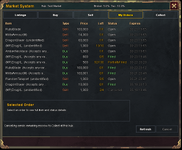
Market System Reveal
We’ve built a brand new Market System to power a fully player-driven economy.This is a foundational shift in how trading works in the world. Instead of a global auction house, the economy is now shaped entirely by player behaviour. What you buy, sell, move, and control will directly influence prices, availability, and opportunity.
This system is designed to create real trading routes, meaningful pricing decisions, and new roles for players who want to specialise in commerce, transport, or market control.
What This Means
Markets are now built around local hubs, not a shared global system. Each hub has its own supply, demand, and pricing.Players can:
- Buy directly from existing sell orders
- Place buy orders at their own chosen price
- Sell instantly into existing demand
- List items and let the market come to them
How It Works
Listings
Browse everything currently for sale in your hub. From here, you can quickly jump into buying or selling the selected item.Buy
Purchase from existing sell orders or place your own buy orders at a price you decide. You can target specific listings or create broader demand for others to fill.Sell
Sell instantly into existing buy orders or create your own sell listings. You control pricing and quantity, allowing you to respond to market conditions.My Orders
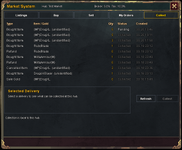
Track all of your active buy and sell orders, monitor progress, and cancel orders that are still open or partially filled.Collect
All completed trades, returned items, and expired or cancelled orders are delivered here. You will need to collect them from the hub.System Design Highlights
- Everything is local to the hub you are in
- Selling into a buy order grants instant gold
- Purchased items are delivered to Collect, not directly to your inventory
- Cancelled or expired orders are also returned to Collect, not your bag or wallet
A Living Economy
This system lays the groundwork for a living, breathing economy.Traders can specialise in buying low and selling high. Transporters can move goods between hubs to take advantage of price differences. Opportunistic players can identify shortages and fill them.
Over time, the market will evolve based on player behaviour, creating a dynamic economy driven entirely by the community.
Attachments
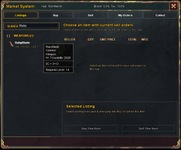
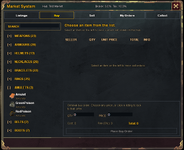
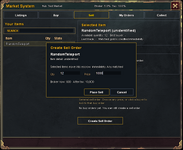

Azze
Cursed

stev0uk1991
LOMCN n00bie
- Nov 22, 2018
- 7
- 1
- 15

- Jan 20, 2014
- 355
- 108
- 70
Expect euro reborn from sanj before this ladany updates if there server going live ?

- Dec 31, 2008
- 1,185
- 67
- 134
Ashes of Jin Open Beta Dates Announced
The world of Jin is almost ready to open its gates.Open Beta begins: 6th July
This beta is our biggest public test yet, bringing together a huge wave of new systems, world activity, combat improvements, boss reworks, item changes, PvP consequences, and server stability work.
This is not just a content patch. It is a major step towards making Jin feel alive, dangerous, and worth fighting over.
Jiangshi Is Coming
Jiangshi invasion system brings a new level of threat to the world. His forces can now push into towns and cities, build pressure in vulnerable areas, escalate their attacks, and react when players interfere.Ignore him, and his influence will spread. Fight back, and he may retaliate.
Expect changing invasion stages, new attack patterns, stronger activity in threatened regions, and new Jiangshi tactics with dangerous effects.
Fight for the Caves
Caves are no longer just places to farm. With Cave Conquest, they become contested objectives where groups can fight for control, push through dangerous content, and earn rewards tied to activity and ownership.World Events
Timed world events will bring sudden activity to different areas of Jin. Zones can become active with special objectives, altered encounters, hazards, bonuses, event monsters, and unique rewards.When the world changes, players will need to move quickly.
Monster Packs
Monsters can now spawn as proper groups that fight together, rather than acting like separate enemies standing near each other.Attack one monster, and nearby pack members may be alerted. Packs can have leaders, regroup when they stray too far, and leash back instead of being dragged endlessly across the map.
Mixed packs can include different roles, such as melee, ranged, support, or stronger leader enemies, making caves, invasions, and event encounters feel more coordinated and dangerous.
Expect fewer simple one-by-one pulls, and more fights that feel like taking on an organised enemy group.
A More Alive World
NPCs are becoming more than static shopkeepers and quest givers. They can now move through the world, walking, running, appearing as part of events, taking part in guard hunts, joining escort encounters, entering combat scenarios, and helping create memorable world moments.Outposts should feel more active. The world should feel less predictable.
Bounties, Outlaws, and Player Hunts
The new bounty and wanted system adds weight to PvP. Dangerous players can become visible targets, tracked through the wanted board, hunted by others, and rewarded with bounty payouts.If you become notorious, expect people to come looking. Survive, and the rewards might just be worth the exile.
A Better World Map
The world map has been improved to make it easier to understand where activity is happening. Important areas, territory status, event information, map data, and masks are being expanded so players can better track the state of the world.Spell Path Progression
Spell paths now offer more long-term character growth and specialisation with new level 24+ progression being added.This opens up more build variety at higher levels, alongside balance and behaviour fixes for several spells.
Combat, Balance, and Item Improvements
A wide combat pass has improved poison, silence, stun handling, damage bonuses, special effects and buffs.Item upgrading has also been cleaned up. Lucky drop stats are now kept separate from player upgrades, gems and orbs apply more cleanly, upgrade stats are easier to read, and item value should be much clearer at a glance.
Stability and Quality of Life
A huge amount of work has gone into making open beta safer and smoother. Saving is more reliable, the login flow is safer, item loading has been improved, group and guild handling has been strengthened, and the server experience should feel much more stable overall.Join the Open Beta
Open Beta is the next major step for Ashes of Jin.Come test the world. Break the systems. Fight the invasions. Claim the caves. Hunt the outlaws. Help shape what comes next.
Discord: https://discord.gg/tNrqnqEqK
Open Beta is now live
www.ashesofjin.com for download.
Just a FYI
- There will 100% be a wipe.
- Drops ect will not be touched during open beta, this is so we have a solid set of data to work from for live.
- There will be bugs, and issues, please work with us.
- Please don't assume this is how live will be.
And, at the end of the day guys, the more you play, the more data we have, the better live will be.
It may seem pointless ect to you, but to us anything is valuable data that will help shape our live strategy.
www.ashesofjin.com for download.
Just a FYI
- There will 100% be a wipe.
- Drops ect will not be touched during open beta, this is so we have a solid set of data to work from for live.
- There will be bugs, and issues, please work with us.
- Please don't assume this is how live will be.
And, at the end of the day guys, the more you play, the more data we have, the better live will be.
It may seem pointless ect to you, but to us anything is valuable data that will help shape our live strategy.